Published
March 05, 2022
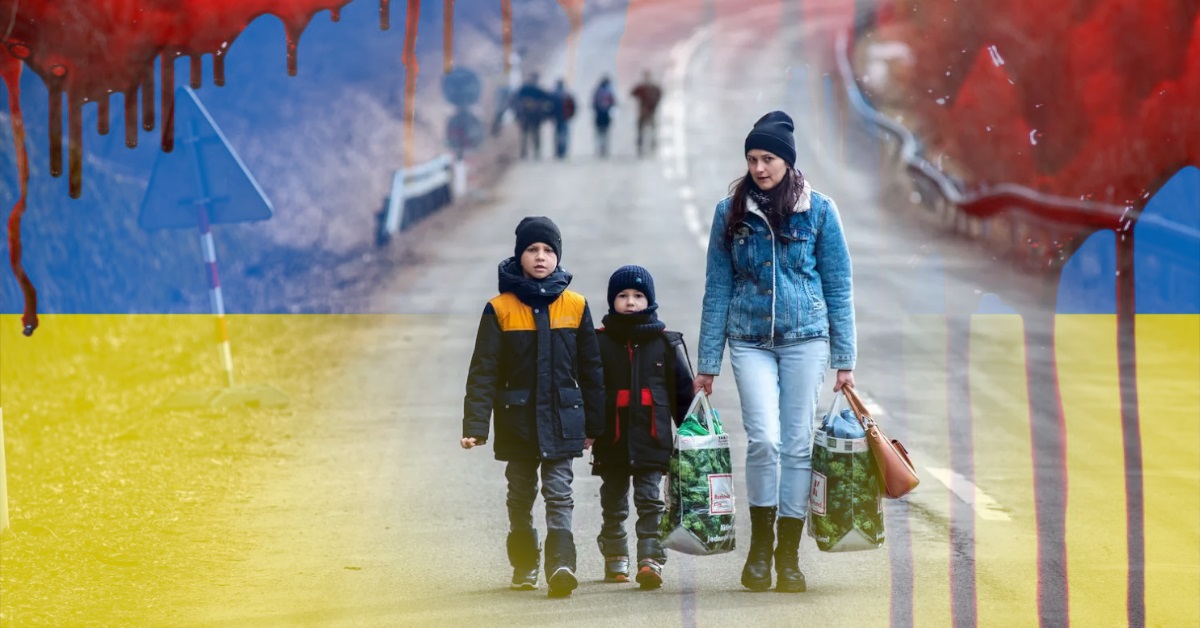
Devastated by the ongoing war in Ukraine, we pray that God will knock some sense into the world leaders' heads for peace to prevail. In the 21st century, it is a disgrace to the human race for families and young children to have to abandon their homes, in the middle of winter, in order to save their lives.
The Mainau Declaration 1955
The Declaration follows on from the 1955 Mainau Declaration against the use of nuclear weapons. It was co-initiated by Otto Hahn, 16-time participant of the Lindau Conferences and first President of the Max Planck Society, at the 5th Lindau Nobel Laureate Conference. The current declaration states: "The discovery of nuclear fission created the basis for the construction of nuclear weapons of destruction. Their current volume has the potential to make the Earth uninhabitable for humans and to wipe out human civilisation. Such weapons must therefore never be used."
The 105 signatories call on governments and business leaders to use scientific knowledge and technologies responsibly and with awareness of their long-term consequences. Russian President Vladimir Putin is urged to respect international legal agreements, recall his forces, start negotiations and establish peace.
The Lindau Nobel Laureate Meetings and the Max Planck Society are convinced that science must continue the dialogue even if politics remains silent, or fights. With this comes the hope that this initiative, along with countless others, will soon lead to a return to peaceful exchange between nations.
Munich – 28 February 2022
In the view of war emanating from Russian soil and the explicit threat of nuclear weapons, we, Nobel laureates in science, economics, and literature, have decided to make this appeal to government leaders.
While we, as scientists, have no political mandate, we are aware of the power that the knowledge we have gained conveys to governments and political actors.
After all, findings and technologies from scientific research and development have made humans the greatest shaping force in the Earth’s system over the last century. The discovery of nuclear fission created the basis for the construction of nuclear weapons of destruction. Their current volume has the potential to make the Earth uninhabitable for humans and to wipe out human civilisation. Such weapons must therefore never be used!
We as scientists are convinced that scientific knowledge of all disciplines and the technologies based on it will bring the greatest benefit to humanity in the future. They can only be achieved through worldwide scientific cooperation. Without them, global problems cannot be solved. The prerequisite is that these findings are used exclusively for peaceful purposes and for the well-being and happiness of all people, while respecting the Universal Declaration of Human Rights.
We therefore call on governments and business leaders to use scientific knowledge and technologies responsibly and with awareness of their long-term consequences. Only in this way can human civilisation continue to develop in a respectful manner towards nature and the Earth’s system in the future. The fundamental principles of the United Nations Charter on the Peaceful Coexistence of Peoples are the prerequisite for our work across borders for the benefit of the Earth and its people.
We call on Russian President Vladimir Putin to respect the agreements under international law, to recall his armed forces, to start negotiations and to establish peace.
The following Nobel Laureates have signed the declaration:
Prof. Dr. Peter Agre, Johns Hopkins Malaria Research Institute, Baltimore, USA
Prof. Dr. Harvey J. Alter, National Institute of Health, Bethesda, USA
Prof. Dr. Hiroshi Amano, Nagoya University, Japan
Prof. Dr. Dres. h.c. Werner Arber, Universität Basel, Switzerland
Prof. Dr. Frances H. Arnold, California Institute of Technology, Pasadena, USA
Prof. Dr. Barry C. Barish, California Institute of Technology, Pasadena, USA
Prof. Dr. Françoise Barré-Sinoussi, Institut Pasteur, Paris, France
Prof. Dr. J. Georg Bednorz, IBM Research GmbH, Rüschlikon, Switzerland
Prof. Dr. Elizabeth H. Blackburn, University of California, San Francisco, USA
Prof. Dr. Thomas R. Cech, University of Colorado Boulder, Boulder, USA
Prof. Dr. Martin Chalfie, Columbia University, New York, USA
Prof. Dr. Emmanuelle Charpentier, Max-Planck-Forschungsstelle für die Wissenschaft der Pathogene, Berlin, Germany
Prof. Dr. Steven Chu, Stanford University, USA
Prof. Dr. Aaron Ciechanover, Technion - Israel Institute of Technology, Haifa
J. M. Coetzee, Adelaide, Australia
Prof. Dr. Elias J. Corey, Harvard University, Cambridge, USA
Prof. Dr. Robert F. Curl Jr., Rice University, Houston, USA
Sir Angus S. Deaton, Princeton University, USA
Prof. Dr. Johann Deisenhofer, University of Texas Southwestern Medical Center, Dallas, USA
Baron François Englert, Université Libre de Bruxelles, Belgium
Prof. Dr. Gerhard Ertl, Fritz-Haber-Institut der Max-Planck-Gesellschaft, Berlin, Germany
Prof. Dr. Ben L. Feringa, University of Groningen, Netherlands
Prof. Dr. Albert Fert, Université Paris-Sud, France
Prof. Dr. Joachim Frank, Columbia University, New York, USA
Prof. Dr. Jerome I. Friedman, MIT Massachusetts Institute of Technolgy, Cambridge, USA
Sir Andre K. Geim, University of Manchester, UK
Prof. Dr. Reinhard Genzel, Max-Planck-Institut für extraterrestrische Physik, Garching, Germany
Prof. Dr. Andrea Ghez, University of California, Los Angeles, USA
Prof. Dr. Carol W. Greider, University of California, Santa Cruz, USA
Prof. Dr. John L. Hall, University of Colorado, Boulder, USA
Prof. Dr. Oliver Hart, Harvard University, Cambridge, USA
Prof. Dr. med. Dr. h.c. mult. Harald zur Hausen, Deutsches Krebsforschungszentrum, Heidelberg, Germany
Prof. Dr. Richard Henderson, MRC Laboratory of Molecular Biology, Cambridge, UK
Prof. Dr. Avram Hershko, Technion - Israel Institute of Technology, Haifa
Prof. Dr. Roald Hoffmann, Cornell University, Ithaca, USA
Prof. Dr. Jules A. Hoffmann, Université de Strasbourg, France
Prof. Dr. Tasuku Honjo, Kyoto University Graduate School of Medicine, Japan
Prof. Dr. H. Robert Horvitz, MIT Massachusetts Institute of Technology, Cambridge, USA
Prof. Dr. Robert Huber, Max-Planck-Institut für Biochemie, Planegg-Martinsried, Germany
Sir Tim Hunt, Okinawa Institute of Science and Technology (OIST), Kunigami Gun, Japan
Prof. Dr. Louis J. Ignarro, University of California, Los Angeles, USA
Prof. Dr. William G. Kaelin, Jr., Harvard Cancer Center, Boston, USA
Prof. Dr. Daniel Kahneman, Princeton University, USA
Prof. Dr. Takaaki Kajita, University of Tokyo, Japan
Prof. Dr. Martin Karplus, Harvard University, Cambridge, USA
Prof. Dr. Wolfgang Ketterle, MIT Massachusetts Institute of Technology, Cambridge, USA
Prof. Dr. Klaus von Klitzing, Max-Planck-Institut für Festkörperforschung, Stuttgart, Germany
Prof. Dr. Roger D. Kornberg, Stanford University, USA
Prof. Dr. Finn E. Kydland, University of California, Santa Barbara, USA
Prof. Robert B. Laughlin, Stanford University, USA
Prof. Dr. Yuan Tseh Lee, Academia Sinica, Taipei, Taiwan (China)
Sir Anthony J. Leggett, University of Illinois at Urbana-Champaign, USA
Prof. Dr. Jean-Marie Lehn, Université de Strasbourg, France
Prof. Dr. Tomas Lindahl, Francis Crick Institute, London, UK
Prof. Dr. Benjamin List, Max-Planck-Institut für Kohlenforschung, Mülheim a.d. Ruhr, Germany
Prof. Dr. David MacMillan, Princeton University, USA
Prof. Dr. Rudolph A. Marcus, California Institute of Technology, Pasadena, USA
Prof. Dr. Eric S. Maskin, Harvard University, Cambridge, USA
Prof. Dr. John C. Mather, NASA, Greenbelt, USA
Prof. Dr. Michel Mayor, Universitè de Genève, Switzerland
Prof. Dr. Arthur B. McDonald, Queen's University, Kingston, Canada
Prof. Dr. Craig C. Mello, University of Massachusetts Medical School, Worcester, USA
Prof. Dr. Hartmut Michel, Max-Planck-Institut für Biophysik, Frankfurt am Main, Germany
Prof. Dr. William E. Moerner, Stanford University, USA
Prof. Dr. Edvard I. Moser, Norwegian University of Science and Technology, Trondheim, Norway
Prof. Dr. May-Britt Moser, Norwegian University of Science and Technology, Trondheim, Norway
Prof. Dr. Shuji Nakamura, University of California, Santa Barbara, USA
Prof. Dr. Erwin Neher, Max-Planck-Institut für biophysikalische Chemie, Göttingen, Germany
Sir Konstantin S. Novoselov, National University of Singapore
Prof. Dr. Ryoji Noyori, Japan Science and Technology Agency, Tokyo
Sir Paul M. Nurse, The Francis Crick Institute, London, UK
Prof. Dr. Christiane Nüsslein-Volhard, Max-Planck-Institut für Entwicklungsbiologie, Tübingen, Germany
Prof. Dr. John O'Keefe, Sainsbury Wellcome Centre, London, UK
Prof. Dr. Giorgio Parisi, Sapienza Università di Roma, Italy
Prof. Dr. Edmund S. Phelps, Columbia University, New York, USA
Prof. Dr. William D. Phillips, National Institute of Standards and Technology (NIST), Gaithersburg, USA
Sir Christopher A. Pissarides, The University of London, UK
Prof. Dr. John C. Polanyi, University of Toronto, Canada
Dr. Venkatraman Ramakrishnan, MRC Laboratory of Molecular Biology, Cambridge, UK
Sir Peter J. Ratcliffe, University of Oxford, UK
Prof. Dr. Adam G. Riess, Johns Hopkins University, Baltimore, USA
Sir Richard J. Roberts Ph.D. F.R.S., New England Biolabs, Inc., Ipswich, USA
Prof. Dr. Michael M. Rosbash, HHMI/Brandeis University, Waltham, USA
Prof. Dr. James E. Rothman, Yale University, New Haven, USA
Prof. Dr. Bert Sakmann, Max-Planck-Institut für Neurobiologie, Planegg-Martinsried, Germany
Prof. Dr. Jean-Pierre Sauvage, Université de Strasbourg, France
Prof. Dr. Randy W. Schekman, University of California, Berkeley, USA
Prof. Dr. Brian P. Schmidt, The Australian National University, Canberra
Prof. Dr. Richard R. Schrock, MIT Massachusetts Institute of Technology, Cambridge, USA
Prof. Dr. Gregg L. Semenza, Johns Hopkins School of Medicine, Baltimore, USA
Prof. Dr. Robert J. Shiller, Yale University, New Haven, USA
Prof. Dr. George P. Smith, University of Missouri, Columbia, USA
Prof. Dr. Vernon L. Smith, Chapman University, Orange, USA
Sir J. Fraser Stoddart, Northwestern University, Evanston, USA
Prof. Dr. Horst L. Störmer, Columbia University, New York, USA
Prof. Dr. Jack W. Szostak, Harvard Medical School, Boston, USA
Prof. Dr. Joseph H. Taylor, Jr, Princeton University, USA
Prof. Dr. Kip S. Thorne, Caltech - California Institute of Technology, Pasadena, USA
Sir John E. Walker, University of Cambridge, UK
Prof. Dr. Rainer Weiss, LIGO MIT, Cambridge, USA
Prof. Dr. M. Stanley Whittingham, Binghamton University (SUNY), USA
Prof. Dr. Eric F. Wieschaus, Princeton University, USA
Prof. Dr. Torsten N. Wiesel, The Rockefeller University, New York, USA
Prof. Dr. Robert W. Wilson, Cambridge, USA
Prof. Dr. Kurt Wüthrich, The Scripps Research Institute (TSRI), La Jolla, USA
Source: The Max Planck Society (mpg.de)
The Max Planck Society conducts basic research in the natural sciences, life sciences, and humanities. It was founded in 1948 as a successor organisation to the Kaiser Wilhelm Society and has 29 Nobel laureates in its ranks. With its 86 Max Planck Institutes and facilities, it is the international flagship for German science: in addition to institutions outside of Germany, it operates another 20 Max Planck Centers with research institutions such as Princeton University in the USA, the Paris University Science Po in France, the University College London in UK, and the University of Tokyo in Japan. Equally funded by federal and state governments, the University College London in UK, and the University of Tokyo in Japan. Equally funded by federal and state governments, the Max Planck Society had an annual budget of 1.9 billion Euros in 2020.
REPUBLICATION of articles on the Blog of ROYAL EXCLUSIVE PROPERTIES & INVESTMENTS I.K.E is STRICTLY PROHIBITED, without the written approval of the company.

ROYAL Vacation Rentals specializes in villa and hotel rental and management, and provides services with utmost sensitivity and care for guests and home owners. It is an affiliate of ROYAL Exclusive Properties & Investments I.K.E, a real estate consultancy and brokerage firm for lifestyle and investment projects, 5-star hotels, impressive villas and plots of land for sale, Villa Rentals, Hospitality Development and Management, Architecture and Construction of residential and commercial properties on the island Crete, in Greece. Hellenic Business Registry: 154878627000
Πολιτική Ιδιωτικού Απορρήτου και Όροι Χρήσης
Terms of Use
Privacy Policy
• EXCLUSIVE PROPERTIES & INVESTMENTS
A distinguished choice of luxury properties for sale and high-end investments in Crete and in Greece.
• VACATION RENTALS
Villas for Rent in Crete, Greece
• HOTEL DEVELOPMENT & MANAGEMENT
Hospitality experts, focusing on hotel-resort development and management.
• ARCHITECTURE & CONSTRUCTION
Inspired architecture and construction of new homes. Residential and Commercial Developments. Built-To-Order properties.